Field Report · April 2026
What to Look For When You Inspect Your Deck
Your deck takes more abuse than almost any other part of your home. In Northern Michigan, it spends winter under snow load, cycles through dozens of freeze-thaw events, and then bakes through a full summer season — all while holding people, furniture, and the weight of whatever your weekend looks like. Most homeowners don't look closely at their deck until a board goes soft underfoot or a railing wobbles. By then, the problem has usually been there for a couple of years. This is what I look for when I walk a deck — and what you should be checking before you host your first cookout of the season.
Joist Hangers and Connectors
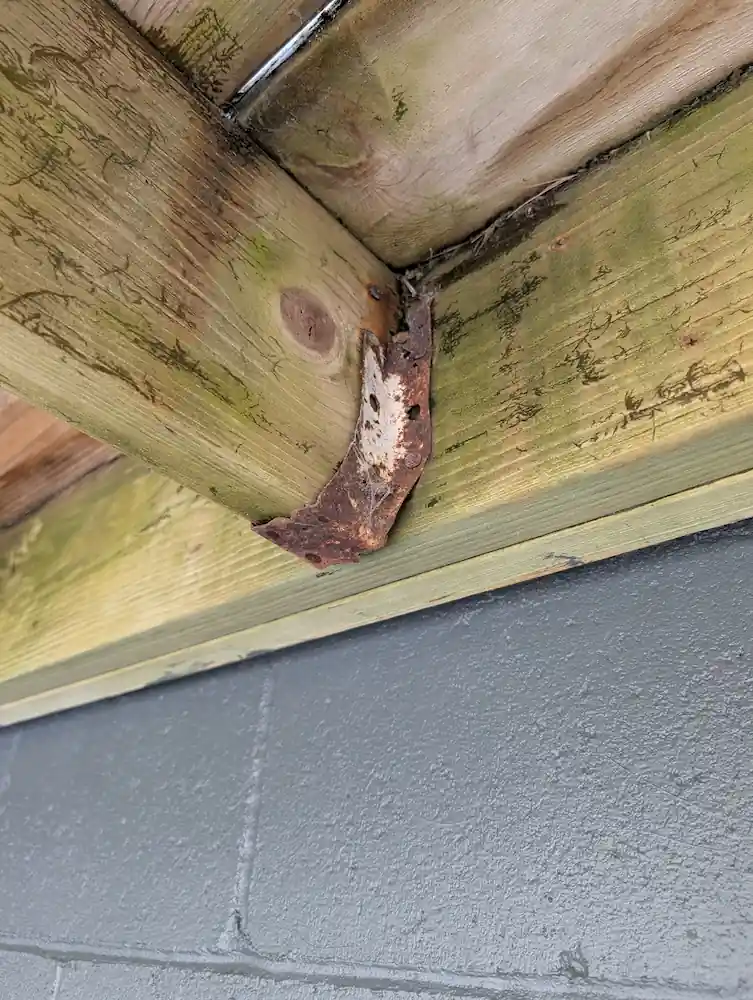
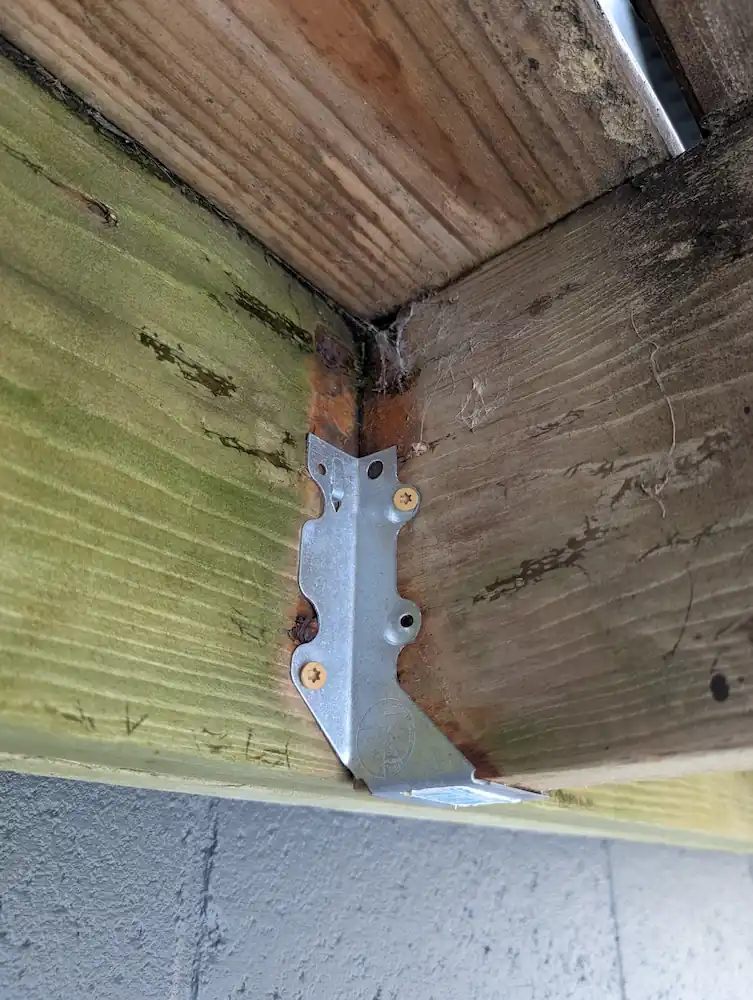
Joist hangers are the metal brackets that hold your deck's framing together. They're not visible from above, which is why they get ignored — but they're one of the first things I check. Look for surface rust, which is normal, versus deep rust that's eating through the metal. A hanger that's lost structural integrity needs to be replaced before it fails under load.
The bigger issue I see regularly: the wrong fasteners. Joist hangers are engineered to be installed with specific hanger nails or structural screws — not standard wood screws. Standard screws have smooth shanks and are designed to resist pull-out, not the shear forces a joist hanger experiences. Under lateral load, the screw head shears off. I've pulled hangers off decks in this area where every single fastener hole had a drywall screw in it. It looks fine from the outside. It isn't.
Deck Boards — Surface and Subsurface
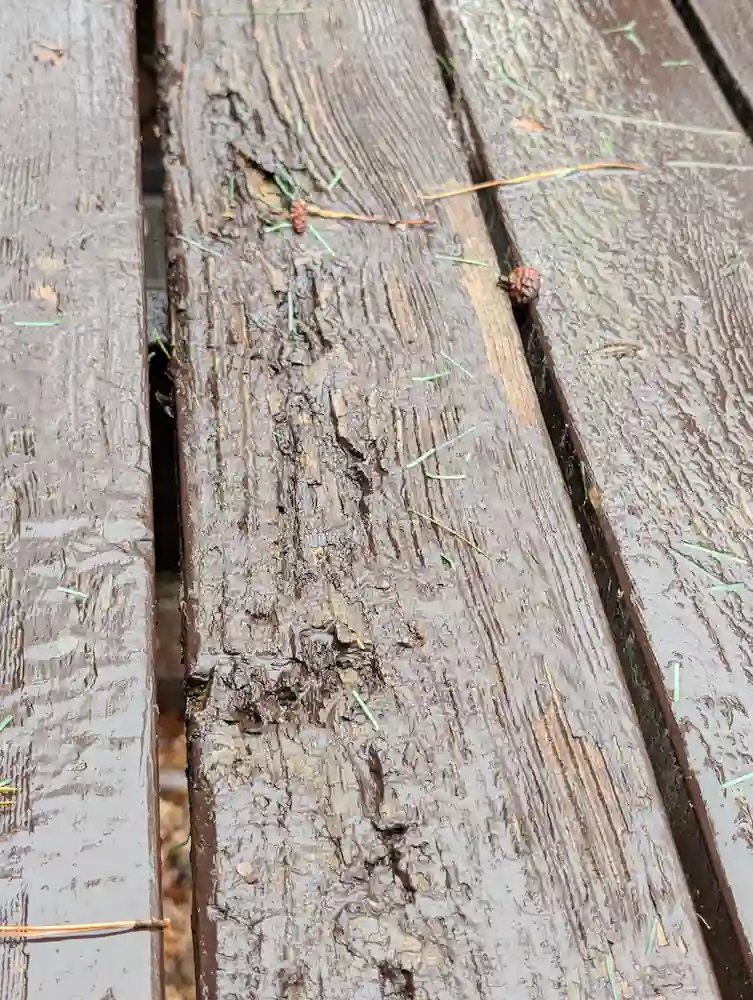
Walk your deck slowly and pay attention to what's underfoot. Soft spots, bounce, or boards that flex more than their neighbors are telling you something. Surface checking is easy — look for cracking, splitting, cupping, and any boards that have gone gray and fibrous rather than just weathered. Those are past their service life.
The harder check is the underside. If you can get below your deck, look at the joists for dark staining, soft spots, or any areas where wood has started to separate. In Northern Michigan, moisture gets trapped under decks that don't have adequate airflow or drainage — and once rot starts in a joist, it spreads quietly. A board replacement is a weekend project. A joist replacement is a contractor call.
Posts and Footings
Deck posts fail from the bottom up — which is exactly why the failure is easy to miss until the post is significantly compromised. Check where the post meets the footing or the ground. If the post is sitting in a metal bracket, look at the bracket for rust and make sure the post base is tight. If the post is set directly in concrete or soil, probe the base with a screwdriver — soft wood means rot has started.
In Northern Michigan specifically, frost heave is a real concern. If your deck footings don't extend below the frost line — which is 42 inches in this region — your posts will move seasonally. Over time that movement loosens connections, racks the frame, and can pull the ledger board away from the house. If your deck has any visible lean or your railings seem out of plumb, the footings are worth investigating.
The Ledger Board
The ledger board is the piece of framing bolted directly to your house that carries one end of your deck. It's also where I see the most serious structural issues — and the most water damage.
The ledger needs to be flashed correctly so water doesn't run behind it and into your rim joist or band board. If there's no flashing, or if the flashing has failed, water infiltrates every rain event. Over years, that rots the ledger, the rim joist behind it, and sometimes the floor framing inside the house. I've seen ledgers that looked fine from the deck side that were completely hollow on the back face.
Check where the ledger meets the house siding. There should be a gap — the ledger should not be buried behind siding or in contact with it. Look for dark staining, paint bubbling, or any soft areas in the siding above the ledger line. Those are signs water is getting in. Also verify the ledger is attached with lag screws or through-bolts, not nails. A nailed ledger is a code violation and a liability.
Railings and Stairs
Railings need to withstand 200 pounds of lateral force per current code — give yours a firm push and see what happens. Wobble is not acceptable on a deck that's eight feet off the ground. Check post bases where railings attach to the deck frame, and look at any balusters for rot at their base if they're wood.
Stairs get more wear than any other part of the deck. Check stair stringers — the diagonal framing pieces — for cracks, especially at the notch cuts. Those notch cuts reduce the stringer's cross-section significantly, and a crack there is a failure point. Also check that stair stringers are not in contact with soil or sitting in standing water after rain.
Most of what I've described here is a visual inspection you can do yourself in 30 minutes with a screwdriver and a flashlight. The goal isn't to alarm you — it's to help you catch the difference between a deck that needs a board or two replaced and one that needs a structural conversation before anyone else steps on it. If you walk yours and something doesn't look right, or you're not sure what you're looking at, that's exactly the kind of thing I sort out during a preventative assessment. I'd rather you call me with a question than find out the hard way that something needed attention.
Tools & Materials Referenced
Not Sure What You're Looking At?
A deck that looks fine from a lawn chair can have serious structural issues underneath. I walk decks as part of every preventative assessment — and I'll tell you straight whether it needs a board, a contractor, or just a coat of sealer.
Learn About Preventative AssessmentsMore videos on YouTube
Subscribe on YouTube